laCultura.cc
  • Svenska
    • retreat /pensionat / b&b
      • kurser / aktiviteter
        • om oss
        • Español
          • pension / b&b
            • cursos / actividades
              • sobre nosotros
              • English
                • retreat / hostel / b&b
                  • courses /activities
                    • about us
                    • blog
                    Welcome ARTE-CENTRAL, new web gallery for artists in Andalucía 15/02/2012
                    0 Comments
                     
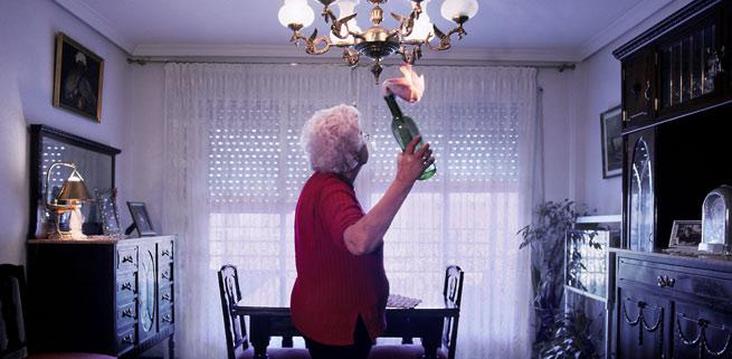
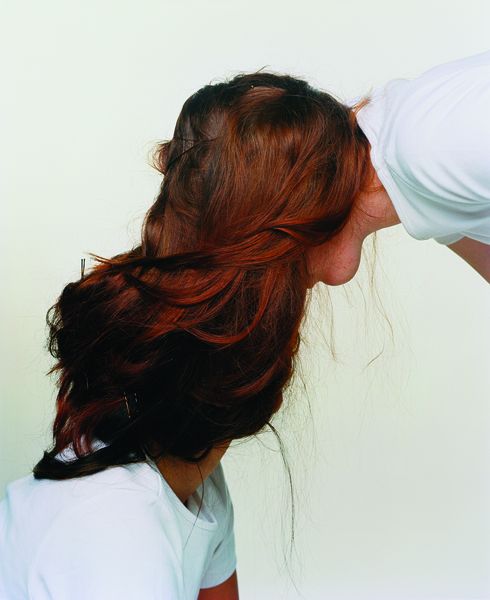
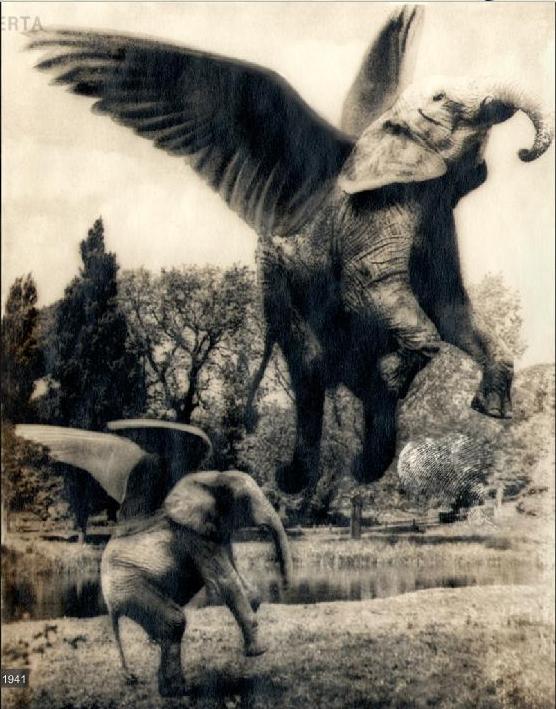
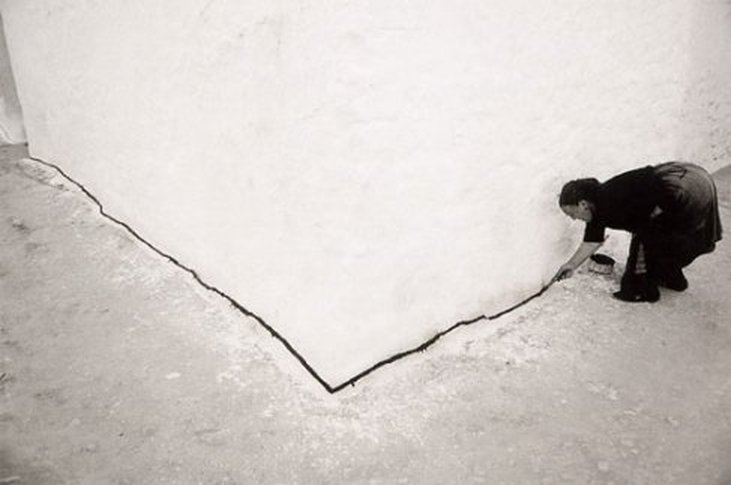
                    ARTE-CENTRAL on the net invites you to view a collection of contemporary art, crafts and design and to meet both emerging and established artists and designers who live and work in Andalucía, in Southern Spain
                    Add Comment
                     
                    Our best courses one more time- Contemporary Art - Crafts - Art Theory 10/12/2011
                    0 Comments
                     
                    Art Workshops in Spain, spring and summer 2012 - our best courses one more time:

                    RAKU Try firing hands-on. Experience the highlights and atmosphere during the burning process. Take part in mini-lectures.  Eat well, and enjoy the magical countryside. 5 days, max 6 participants . Feb 27 -  March 2 , and/or April 9-13, 2012

                    CONTEMPORARY ART & concrete as an art medium. Casting, mold making, modelling and carving. Site-specific art and local identity, contemporary art, Spanish art today, concrete and fine art. Max 8 participants. 26 June - 2 July, 2012

                    HELIGHETENS BILDER The Sacred Image (in Swedish only) with Tom Sandqvist. Helighetens bilder är en workshop som syftar till att kombinera teori och konstnärlig praktik utifrån “heligheten” som gemensamt tema. Med utgångspunkt i sju föreläsningar / seminarier om helighetens olika både historiska och samtida uttrycksformer kombineras sedan den teoretiska reflektionen med eget konstnärligt arbete samt studiebesök i kyrkor och i Alhambra. June 14 - 23, 2012

                    for more info:see webpage  or contact us

                    LaCultura was established in 2005. We offer courses and workshops in Cultural Studies, Creative Writing, Art and Design (Contemporary Art, Ceramics, Painting, Artists' Books, Concrete, Land Art, Art Theory, and more) and courses in Spanish language.  We bring in only professional teachers from colleges and universities from all over the world. The courses comprise both theory and practical application; lectures, discussions, individual work and advising.  Our groups are small and we give much attention to individual students. We are located in the small historical village of Cútar, hidden in the coastal mountains not far from the sea. Our students usually stay in our hostel.

                    Add Comment
                     
                    Arte-Central: a new art space in Axarquia 30/10/2011
                    0 Comments
                     
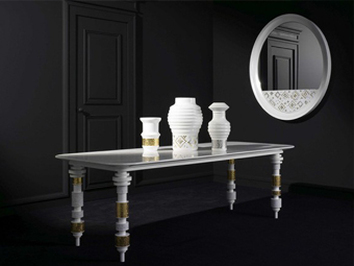
                    Arte Central is a new art space in Axarquia, where artists and designers in the area will show their work, and celebrate the arts through innovative events.
                    It will be a place to be curious about the arts, crafts and design, to explore with friends, get ideas, or enjoy a cup of coffee. Currently they are looking for the best space for the new gallery - please contact Arte-Central if you have suggestions. info@arte-central.com
                    Add Comment
                     
                    How to make soap from olive oil - the old, traditional, basic way 29/10/2011
                    0 Comments
                     
                    In Cútar one makes soap from olive oil as soon as the oil is a year or two old. Actually, one can even make it from oil that has been used for deep frying... And, any soapy water left from cleaning up after making the soap can be saved and used in the washing machine. Waste? That doesn't exist.
                    How to:
                    5 liters olive oil, old or new. Add 1 kilo caustic soda dissolved in water, add more water. Total amount of water: 5 liters. Stir for one hour. Pour into a form. Let sit over night. Cut. Let sit in a shady place a couple wks. The longer you wait the better the consistency of the soap. If you want a scent, add just before pouring up.
                    Contrary to what the pictures below illustrates, the caustic soda is very corrosive, and protective clothing, especially gloves and eye protection, is a very good idea. Click below to start slide show.

                    Add Comment
                     
                    RAKU Ceramics Workshops / Talleres Ceramica 14/10/2011
                    0 Comments
                     

                    RAKU workshop in Andalusia  /  RAKU taller en Andalucía 2012

                    IN ENGLISH: Just like last year. Workshop in Raku ceramics 27 feb – 2 March or 9-13 April. Try hands-on firing and experience the atmosphere during the burning process and its highlights, participate in mini-lectures, eat well,  and experience the magical nature. The workshops takes place over 5 intensive days at laCultura.cc, our small and personal cultural center in the idyllic village Cútar in the Andalusian coastal mountains, about 35 km east of Malaga, Spain. Instructor Cilla Adlercreutz, Swedish ceramicist and artist, teaches in a variety of technics. In her own studio, and while traveling around the world, Cilla Adlercreutz has since the 1970s developed technics and materials based on ancient traditions and knowledge of minerals.Price: 540 euros / 4950 SEK includes workshop, materials, bed, breakfasts & dinners. excl. travel expenses

                    EN ESPAÑOL: Primavera 2012 estamos aquí otra vez con: Taller de Rakú en La Axarquía. 27 feb – 2 marzo o 9-13 april. Igual como el año pasado: prueba cocinar y experimenta la atmósfera durante la cocción y su fuego. Participa en las charlas. Disfruta la buena comida y el ambiente mágico. Las talleres tienen lugar durante 5 días intensivos en laCultura.cc, un pequeño y íntimo centro cultural ubicado en pueblo idílico de Cútar en el litoral este de Málaga. Profesora Cilla Adlercreutz, ceramista y artista sueca, enseña varias técnicas. En su taller, como en sus viajes, Cilla Adlercreutz, desde los años 1970, ha desarrollado técnicas y materiales basados en tradiciones y conocimientos antiguos de minerales. Precio incluye talleres, materiales, alojamiento, desayunos y cenas, excluyendo los gastos de viaje.

                    Más informacíon/ more information 
                    Add Comment
                     
                    Cuéntame cómo pasó - always on Thursday Evenings 29/09/2011
                    0 Comments
                     
                    We have spent many many Thursday evenings in front of Spanish TV. Through the eyes of the middle class Alcántara family, we have experienced Spain’s day-by-day transformation from Franco fascism to modern democracy. Simple, honest, at times funny, at times tragic, without exaggerating characters or situations,  and with great acting and  great script writing - this is TV at it's best.

                    Cuéntame cómo pasó is a Spanish television series set during the last years of Francoist rule, and the transition to democracy in Spain. It has been broadcast by the Spanish public TV channel TVE1, since 2001.

                    Relying on a combination of micro and macrohistory, the series recounts the experiences of a middle class family, the Alcántara, during the last years of Francisco Franco and the beginning of the Spanish Transition, and is both a chronology and a socio-political drama of the time.

                    The series was created to celebrate the first 25 years since the transition and its didactic spirit is clearly evident in some of the episodes. It includes documentary interviews with historical figures of the era, such as those concerned by the assassination of the then Prime Minister Carrero Blanco or the death of Franco.

                    From its first episode, broadcast on September 13, 2001, Cuéntame has reflected changes in Spain since 1968 (it starts in April 1968.) In December 2008, TVE and Ganga Group announced that the series, in its 10th season, had achieved very good audience levels, and would be renewed for up to 3 more seasons, with the storyline moving firmly into the 80s and the “Movida madrileña”.

                    The Alcántara's are a middle class family who live in Madrid, Antonio (the father), Mercedes (the mother), Ines, Toni, Carlos and Maria, are the members of that family, who live with the grandmother, called Herminia. Other Characters like Cervan (a man who sells the newspaper in a little shop) or Desi (who is the best friend of Antonio) represent the typical Spanish society in the last years of Franco and the beginning of the Spanish Transition (1975). (source: partly wikipedia)

                    And you can still watch all the old episodes on RTVE.ES
                    Add Comment
                     
                    "The Ornament of the World" , book AND film 26/09/2011
                    0 Comments
                     
                    A couple of years ago, in looking for literature on Andalucía and its history, we came across  "The Ornament of the World" by María Rosa Menocal. The Ornament of the World" describes an era in medieval Spain from 750 to 1492 when the three monotheistic faiths clashed, intermingled, and produced a rich, tolerant culture. We were intrigued and happy to find how the writer had created a dramatic story through a series of vignettes that evoked the differing cultural epochs of the 700-year period and introduced influential figures from the three faiths, and managed to bring to life a time and place largely overlooked in Western histories.

                    The writer, Maria Rosa Menocal, is professor of Spanish and Portuguese and Director of the Whitney Humanities Center at Yale University. In trying to find out if the book is still in print, since we really would like to recommend it (it is!), we found out it also will be a documentary film. As soon as it's out we'll do our best to let you now. But until then, please don't miss this reading if you are interested in Andalucía and its history.

                    Add Comment
                     
                    How are ancient olive trees harvested? How is olive oil made? What are some great ways to use olive oil? 15/09/2011
                    0 Comments
                     
                    Welcome to harvest  OLIVE OIL in Andalusía, Málaga 

                    How are ancient olive trees harvested? How is olive oil made? What are some great ways to use olive oil?
                    A guided workshop; description of olive varietals, care and maintanence of olive trees, instruction and participation in olive havesting, great traditional food, olive pressing and oil production, soap making and much more.

                    490 € /person  (@ 4 guests)
                    Included in the fee (5 days):
                    Transport from Málaga, accommodations, local transport, guidning, history, olive picking, visit to the cooperative press, breakfast, tapas and home cooked Andalusian welcome dinner. Other meals: self catering or restaurant/bar.

                    DATES:  choose dates between 10 nov - 10 mars. We also organize 1-, 2-, och 3-day workshops – or, you can extend you visit with as many day as you like for a little extra fee – booking allowing.

                    History – havest – food. In Andalusia olives have been cultivated for more than 3000 years. Spain has more olive trees and produces more olive oil than any other country in the world, and of course with the highest quality. In the small, authentic village of Cútar the methods utilized to cultivate olive are still very traditional, from family owned ancient groves. read more. Accomodations in 2-, or 3, bed rooms at laCultura, our small intimate hostel in the middle of the village.

                    CONTACT US ABOUT YOUR DESIRED DATES and INQUIRY OF AVAILABILTY     Let’s go / laCultura

                    day 1
                    18.00  Transfer from Málaga/airport
                    19.00  Arrival to Cútar                  
                    20.30  Home-cooked
                    Andalusian  dinner
                    22.00  Discussion on olives and local environment.

                    day 2
                    9.30  Short hike to olive groves
                    - Andalusian campesino breakfast,
                    - About varietals and harvest
                    - group work
                    14.00  Lunch at local restaurant
                    16.00  guided excursion/hike
                    20.30  Wine, tapas and conversation in Cútar

                    day 3
                    9.00 Breakfast
                    10.00  Hike to groves, group work
                    14.00  Lunch at local restaurant
                    15.30  Tour of medieval Vélez-Málaga
                    20.30  Wine, tapas and conversation in Cútar

                    day 4         
                    9.30  Hike to olive groves
                    - -Andalusian breakfast
                    -group work
                    12.00  Delivery of olives to the press and coop Los Romanes14.00  Lunch at local restaurant, excursion or hike
                    21.30 To the groves to burn prunings, better than fireworks

                    day 5
                    Closing breakfast
                    Departure to Málaga

                    The above schdedule is preliminary. For example weather we cannot control, which can mean changes.  All meals included except for those at restaurants, which are always quite reasonable.

                    Add Comment
                     
                    Harvest time for Mango in Andalucía, Spain 10/09/2011
                    0 Comments
                     
                    Here in Axarquia, in our almost tropical climate, the mango trees that once only graced local gardens have successfully transmuted into cultivars grown in open-air plantations. Spanish mangoes are the only ones in the world that reach the marketplace clad in their own waxen coat  and therefore not washed or treated with edible varnishes or fungicides.

                    Mangos don't get sweeter than this!  Harvest time: September and October.
                    Spanish mangoes are discernibly different from others in flavor and aroma because they are harvested almost as soon as they ripen on the plant: as a result, they contain a higher percentage of sugar than any others in the European marketplace. They can reach 20 degrees Brix, compared with the 12 or 14 degrees found in fruits coming into Europe from other sources and harvested before they are ripe. The varieties most commonly grown around here are Osteen, Kent and Keitt, known for their melt-in-the-mouth flesh, citrus aromas and outstanding sweetness. These mangoes’ reddish-purple skins gleam in the sun from first thing in the morning during the harvest months of September and October, embellishing the Vélez-Málaga to Benamargosa stretch of the road through Axarquía, all the way up the hills to laCultura.

                    You can read more about Spanish mangos at the excellent site 'Food from Spain', from where some of the above info was captured.


                    Add Comment
                     
                    The Three Arab (Magreb) Books of Cútar 06/09/2011
                    0 Comments
                     
                    Muhammad ben Ali al-Yayyar’s hopes came true when the three manuscripts he had hidden 500 years previously in a wall, supposedly in his home, were discovered when masons were working on the house on Calle Horno in the middle of the village of Cútar in June of 2003.

                    Al-Yayyar had carefully encased the books in straw and mud and placed them in the niche in the wall later filling it to prevent it from sounding hollow when hit.
                    This is his last entry:
                    “The Lord of Castile broke the agreement and let baptize the people of Granada in the beginning of de yumadà al-ulà, which is equivalent to the middle of the month of duyanbir (december) of the year 905 (1500). Almighty God make them perish and treat them in a manner which only one who is decent and worthy is able to. It happened on a friday at dusk.”

                    Muhammad ben Ali al-Yayyar, alfaquí, scholar of Islamic law, and imam of the mosque of Cútar, in la Axarquía of Málaga, must have sighed deeply. Something which gave a sign in some way of the pain and meloncholy that were produced by the thoughts that were envolved with scribing this note. It was included in his vademecum, manual and journal where he not only kept all of his legal references according to the laws of Islam that he would need in the function of alfaquí, but also many of the questions and observations he considered represented value to his Islamic culture. This culture that during 800 years had enriched the land of al-Andalus, but was successively reduced to the Nasarid Kingdom of Granada. After the seizure of the Guadalquivir valley, Jaén, Córdoba and Seville in the first half of the 13th century, the Nasarid Kingdom continued under constant threat of invasion from the Christian conquerors for another 250 years. This kingdom depended until that time on the cultivated slopes and terraces of Cútar and the neighboring villages. Its olives, and its vines which produced the most famous raisins in the world, in al-Yayyar’s day as well as today.
                    It had been a month since the Catholic queen, Isabel of Castile, had ordered, under the council of Cardenal Cisneros, the ”general conversion” (forced) of the Mudejar of the kingdom which had been conquered a decade earlier. We don’t know for sure why al-Yayyar hid the books at that time, whether it was fear of being discovered as a Cryptomuslim, or whether he believed, as his fellow Jewish citizens believed 10 years earlier, that the circumstances surrounding their forced conversion would be temporary - That possibly in some 10 years or so the situation which had been the case centuries earlier would some how return to its natural course, that the followers of the three Semitic religions would once again coexist in al-Andalus. Land that once came from the Vandels and Visigoths, considered by the Arabs and Moor for centuries to be the anteroom to paradise.

                    However, it didn’t turn out that, the intention of unifying everyone of Spain into one single faith was a fact. At this time it came to the realization of the Crypto-Jews, and not really much before. The Catholic monarchs began the expulsion, unique in the history of this country, and thereby the migration of the Hispanic Sefardim, taking with them their particular experience of al-Andalus to every corner of the Mediterranean, the Balkans, the Baltic and North Sea and the Americas.

                    The Muslims however prepared to put into practice for the first time since the inception of the teachings of the Profet in Mecca, the Koranic doctrine of concealment which allowed them to remain in Spain for almost 100 years longer, pretending to be Christian but practicing Islam clandestinely

                    After leaving the pen next to the inkwell, al-Yayyar, closed his book. He got up, taking the explanatory notes, his book on Islamic law and the family’s luxurious, polychromatic copy of the Koran and went to the top floor of the house, where he waited for his wife and children. There, just above the door on the ground floor, facing the courtyard, he had prepared a small cupboard. In that niche dug in the stone, gravel and mud wall he had put some earth and straw. Al-Yayyar placed the three books on the bed of straw and covered them with more straw, then with more earth. This way he filled the entire space so that, once refinished, the wall would not sound hollow. In this way he placed the books, which symbolically and materially meant fidelity to beliefs and a way of life that had been declared unwelcome in a land which had contributed to its cultural splendor for 781 years.

                    In less than ten years, members of the al-Yayyar family had gone from being free Muslims in an Islamic state to being Muslim citizens subject to particularly restrictive legislation applied by the Christian government. That is to say they became Mudejares (domesticated Arab Muslim), later to end up as Moriscos, Moors, or Christians of Muslim origins and in most cases, secretly continued practicing their former religion.

                    We do not know what happened later. Whether al-Yayyar and his family remained in Cútar, quietly preserving their Islamic loyalties until the general expulsion of the Moors from 1609-1612, or if their descendants stayed in Cútar, integrating with other new Christians to the mass of former Christians, and today, are the direct ancestors of some of the residents of this Cútar (Aquta) in the Axarquia. Or if, as did many of his coreligionists, once forcibly converted to Christianity chose to flee to North Africa in the hope, distant perhaps, of returning one day to be Muslims in a new al-Andalus.

                    However, something did happen that al-Yayyar probably didn’t expect. In June 2003, the Santiago family was getting ready to remodel their house on C/ Horno in Cútar. It was quite a surprise for the builders and children who were watching the demolition of the wall facing the courtyard. After the sledge hammer had pounded the wall, there appeared between straw and earth, some books with strange script in a language foreign to the present inhabitants.

                    As an aside, manuscripts of this kind are usually found by albañiles (masons). This Spanish word comes from the most important mathematician of western Arab world (al-Andalus magreb). His name was Al-Banna.

                    There were three books found:

                    The first was a bookof trade, a book of reference, that as an alfarquí, Islamic scholar of law, al-Yayyar, consulted when he needed to clarify any particular case relative to his position. It includes parts of notarial forms, affidavits, inheritance rights, mathmatics, traditions of the Prophet and legal questions concerning marriage.

                    It is well known that alfarquis were able to access once hidden Islamic power in the peninsula. Jurisdiction over certain civil cases, while there was a Moorish justice, they were in charge of administering, controlling donations to mosques and practically monopolizing the office of notary in Arabic.

                    This book is of paper with some loose pages and slips of paper some of which some were folded. The book is bound in parchment.

                    The second book, unlike the previous, was more personal. This is where Muhammad al-Yayyar gives us data and dates of his life and his community, but there are poems contained prophetic invocations, sermons, hadith and other chapters of religious, magic and esoteric character. It was his vademecum or journal.

                    This book is also of paper with inserted loose pages. The parchment cover has geometric designs. The back cover has tree type of Arabic script, possibly an earlier document later used to bind the book. Because the books were not reported the the Malaga Archive during the first week after their discovery, we don’t know if the placement of these loose pieces were of any significance.

                    The third book is a copy of the Koran, necessary and essential for every Muslim and therefore, for a alfaqui, faqih. This is certainly the family Koran, and is the oldest of the documents, since it was, in the time of al-Yayyar, more than a century old, being from the 14th century. It is was scribed with several colors of ink and, unfortunately, is incomplete because it lacks a few final pages, which really doesn’t matter so much due to its great historical importance. The Andalusian government financed the production facsimile editions. One of which was given to king Mohammed VI of Morocco, another will be housed in the Monfí Museum in Cútar.
                    Al-Yayyar was not able to retrieve his books, but their cultural successors, those who have found them, understand the significance that they must have had for him. We now have them to use and to treat them with due respect and appreciation.

                    We can say then that al-Yayyar’s hope have been fulfilled in that his lost books together with his memories and those of his people are now preserved for the benefit of everyone.

                    The source of the information used for this article is from the study by Maria Isabel Calero Secall, “Los manuscritos árabes de Málaga: Los “libros” de un alfaquí de Cútar del s. XV”,
                    Nicolás Roser Nebot, Departamento de Traducción


                    Monfi festival: Music, food and sweets of Al-Andalus, lectures on Andalusian culture and the three Arab language manuscripts found in Cútar, are some of the highlights included in the program of the two-day 2011 Monfí Festival in Cútar, Axarquia, this 8-9 October 2011.  For more info, or for info on how to get there and where to stay; please contact laCultura

                    Add Comment
                     
                    << Previous


                      La mayoría de este blog está escrito en inglés. ¿Te gustaría que traducido a su idioma? Clic abajo para una versión automated. Want the blog translated in to your language? Here is an automated version:
                      Website Translation Widget

                      Categories
                      laCultura.cc

                      All
                      Andalusian Food & Wine
                      Art Andalusia Reviews
                      Art Axarquia
                      Art & Education
                      Axarquia History
                      Design Axarquia
                      Film & TV
                      How To
                      LaCultura Cútar
                      Literature & Andalucia
                      Music Axarquia
                      Non Profit Lacultura
                      Retreat Hostal Lacultura
                      Workshops Lacultura


                      Want to stay updated on our commentaries on arts, culture, travelling and retreats in Andalucia?
                      (your info stays with us!)

                      Enter your email address:


                      RSS Feed

                      Picture
                       To our facebook page


                      IF YOU FIND ANY OF THE CONTENT ON THIS BLOG USEFUL,  PLEASE DO NOT HESITATE TO PUT A LINK TO US ON YOUR OWN PAGE.            Thank You

                      Links
                      UMA Bellas Artes
                      Tripadvisor
                      Helen Vigil
                      Rudy Vigil
                      Azulejos / Tiles webstore

                      OficioYArte
                      Cútar Weather
                      Tertilua Andaluza

                      Archives

                      February 2012
                      December 2011
                      October 2011
                      September 2011
                      August 2011
                      July 2011
                      June 2011
                      April 2011
                      March 2011


                      Picture
                      Photo: Helén Vigil
                      http://www.helenvigil.lacultura.cc

                      Mail us


                      Picture